KRISHI-RASTAA Soil Testing System
Soil testing is a critical practice for Indian farmers to ensure efficient, sustainable, and profitable farming. By analyzing key parameters, farmers can understand the soil’s health, fertility, and suitability for various crops, and make informed decisions on fertilization, irrigation, and land management.
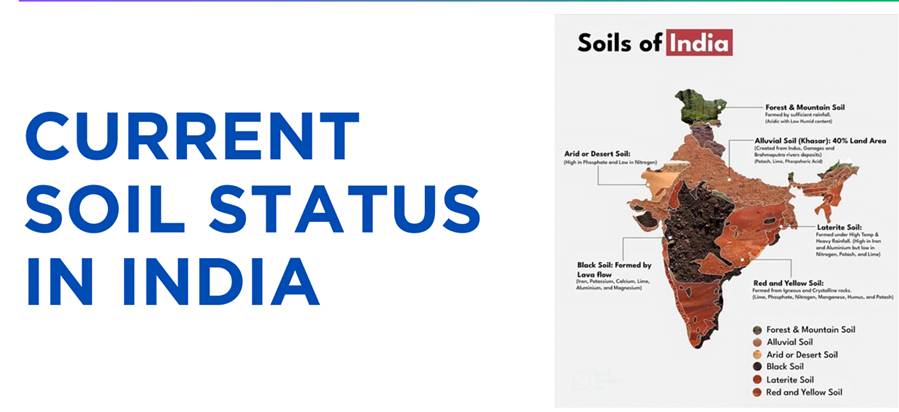
Why this matters for Indian farmers
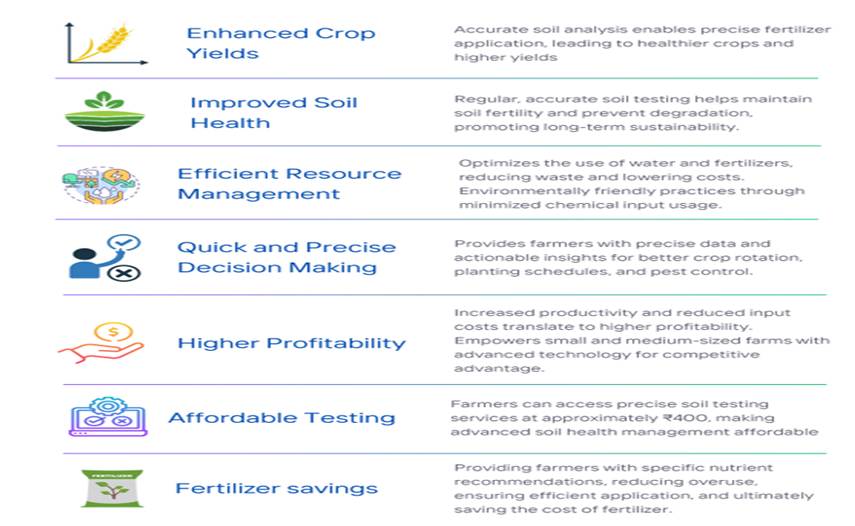
- Customized Fertilizer Use: Avoids blanket NPK application. Reduces input costs and increases yield.
- Improved Productivity: Balanced nutrition improves crop quality and quantity.
- Soil Health Management: Long-term soil sustainability through organic matter and micronutrient balance.
- Government Schemes: Many state agriculture departments offer free or subsidized soil testing under Soil Health Card schemes.
- Climate-Resilient Farming: Helps adapt to climate change with better input efficiency and water use.
Product Features
Bhu-Vision is a revolutionary IoT-based automated soil testing and agronomy advisory platform and represents a new era in precision agriculture. This system seamlessly conducts 17 key soil parameter tests in just 30 minutes. It provides quick and accurate results directly to farmers and stakeholders through a soil health card on their mobile devices.
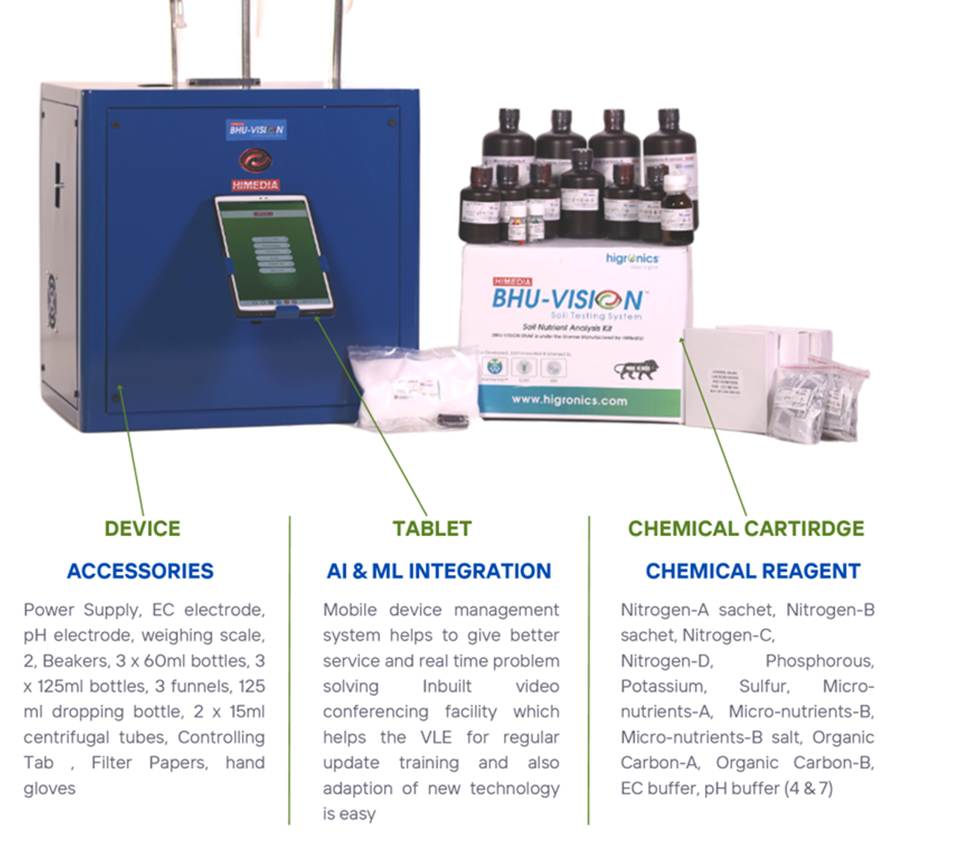
Soil Parameters tested
1. Soil pH
- What it indicates: Acidity or alkalinity of soil.
- Importance: Affects nutrient availability; most crops grow best in pH 6.0–7.5. Extremes can lock essential nutrients.
2. Electrical Conductivity (EC)
- What it indicates: Salt concentration in soil.
- Importance: High EC can hinder water absorption and damage crops. Crucial in areas with saline water or poor drainage.
3. Organic Carbon (%OC)
- What it indicates: Soil organic matter content.
- Importance: Enhances soil fertility, water retention, and microbial activity. Low organic carbon reduces yield potential.
4. Available Nitrogen (N)
- Importance: Essential for vegetative growth. Deficiency causes stunted growth and yellowing. Overuse leads to pollution and cost.
5. Available Phosphorus (P)
- Importance: Supports root development and flowering. Often locked in alkaline soils; critical to apply the right form and quantity.
6. Available Potassium (K)
- Importance: Improves disease resistance, drought tolerance, and crop quality. Helps in grain filling and sugar translocation.
7. Available Sulphur (S)
- Importance: Important for protein synthesis and oilseed crops. Deficiencies are increasing in Indian soils.
8. Available Zinc (Zn)
- Importance: Key for enzyme systems and growth hormones. Deficiency leads to stunted plants and leaf discoloration.
9. Available Iron (Fe)
- Importance: Essential for chlorophyll production. Deficiency common in high pH soils, especially in North India.
10. Available Copper (Cu)
- Importance: Important for reproductive growth. Low levels affect grain and fruit development.
11. Available Manganese (Mn)
- Importance: Affects photosynthesis and nitrogen assimilation. Deficiency can impair crop growth and yields.
12. Available Boron (B)
- Importance: Crucial for flower and fruit development. Especially vital for crops like groundnut, cotton, and vegetables.
13. Available Calcium (Ca)
- Importance: Strengthens cell walls and root tips. Also reduces soil acidity and improves structure.
14. Available Magnesium (Mg)
- Importance: Central to chlorophyll and photosynthesis. Deficiency can cause interveinal chlorosis in leaves.
15. Soil Health Index (SHI)
The Soil Health Index is a composite score derived from various physical, chemical, and biological properties of the soil. It gives an overall rating of how “healthy” the soil is for sustainable crop production. It is based on Soil pH, Organic carbon, Nutrient status (NPK and micronutrients), Microbial activity, Texture and structure and Moisture retention capacity. SHI is important as it :
- Helps farmers understand overall fertility and productivity. Encourages balanced nutrient management.
- Useful for planning crop rotations and sustainable practices like organic inputs or biofertilizers.
- Promoted under the Soil Health Card Scheme of the Government of India.
16. Bulk Density (BD)
Bulk density is the mass of dry soil per unit volume, including the air space between soil particles. Indicates soil compaction, which affects root penetration, water infiltration and drainage and soil aeration. Helps determine how much water and nutrients the soil can hold. Important when using machinery or doing deep tillage. Implications for Farmers:
- High BD = use organic matter, deep tillage, cover crops
- Low BD (in very loose soils) may lead to erosion needs consolidation
17. Soil Particle Density (True Density)
Soil particle density is the mass of soil solids per unit volume, excluding the pore space. It reflects the type of soil minerals (e.g., quartz, iron oxides) and it’s important in soil physics and irrigation planning, especially in sandy or clayey soils.
Success Stories
 Center for Social Integration and Borderless World